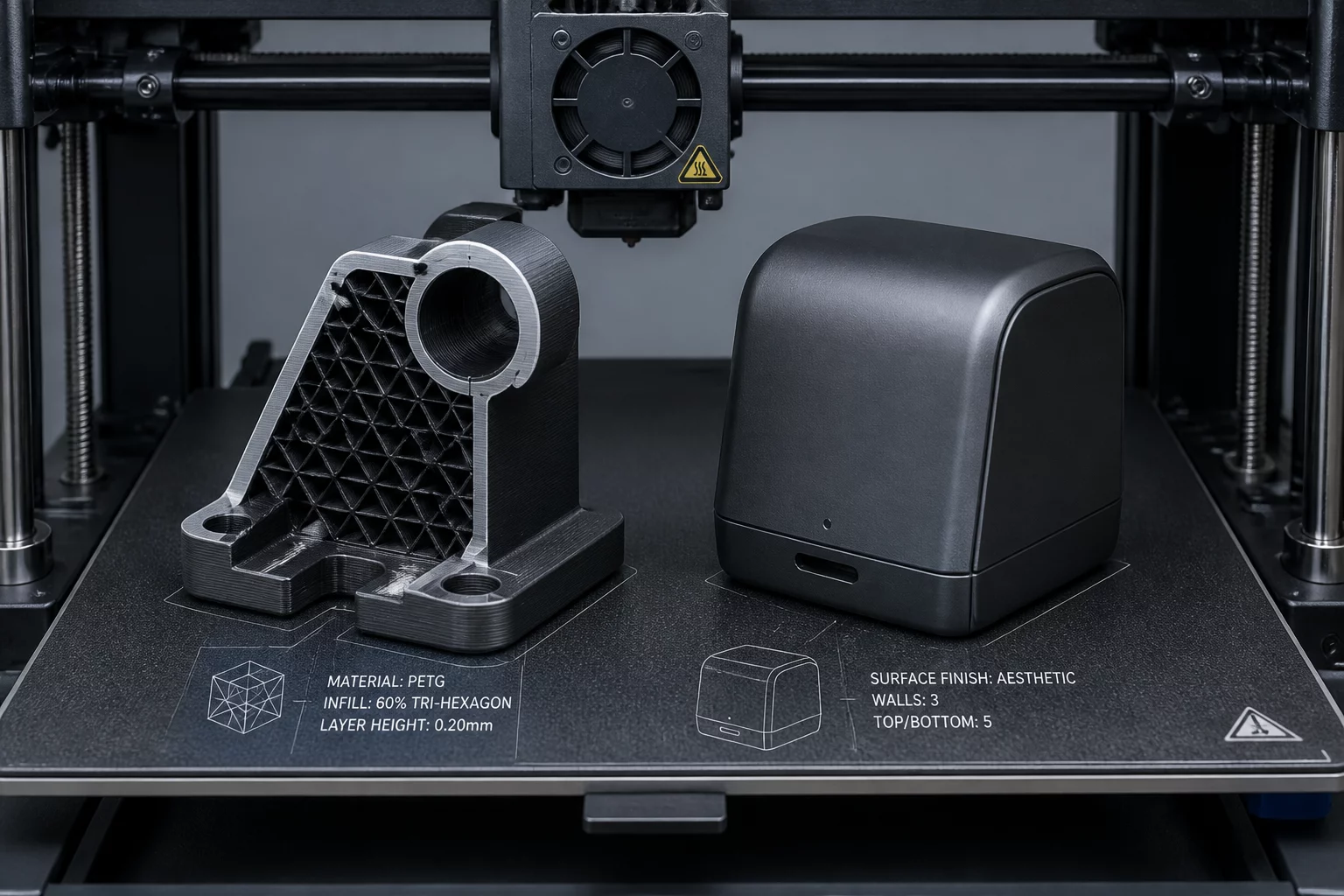
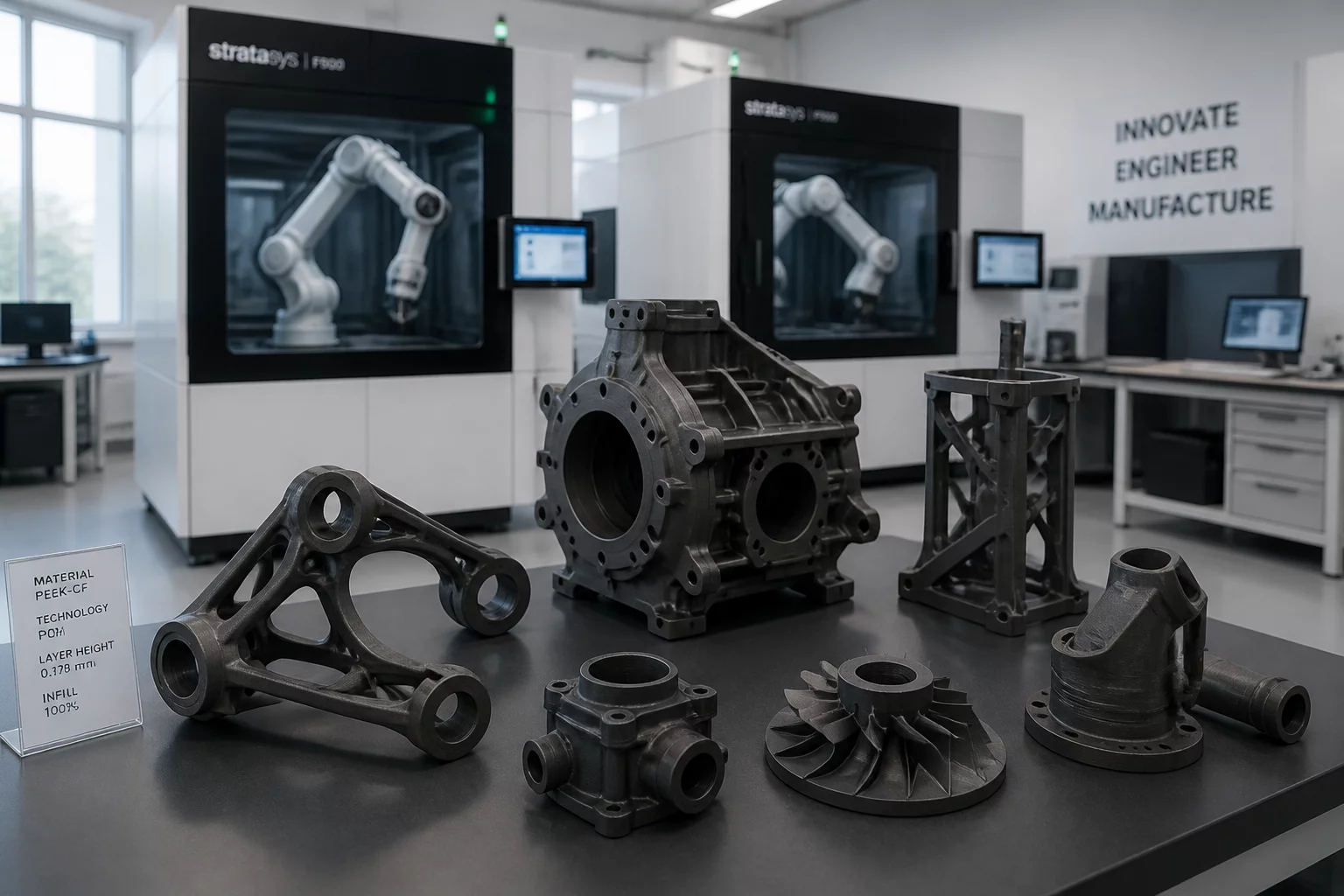
ONE OBJECT NEEDS A DIFFERENT SETTING, NOT THE WHOLE PLATE
Preserve print throughput by isolating infill densities and support modifications to unique geometries instead of re-slicing the entire build platform.
Explore slicing cases where one project, one object, or one part needs different treatment without changing everything else.
Before adjusting nozzle temperatures, wall loops, or speeds, apply the universal gatekeeper test: does this setting need to change everywhere, or only here?
Select any phase to examine its parameter scope criteria.
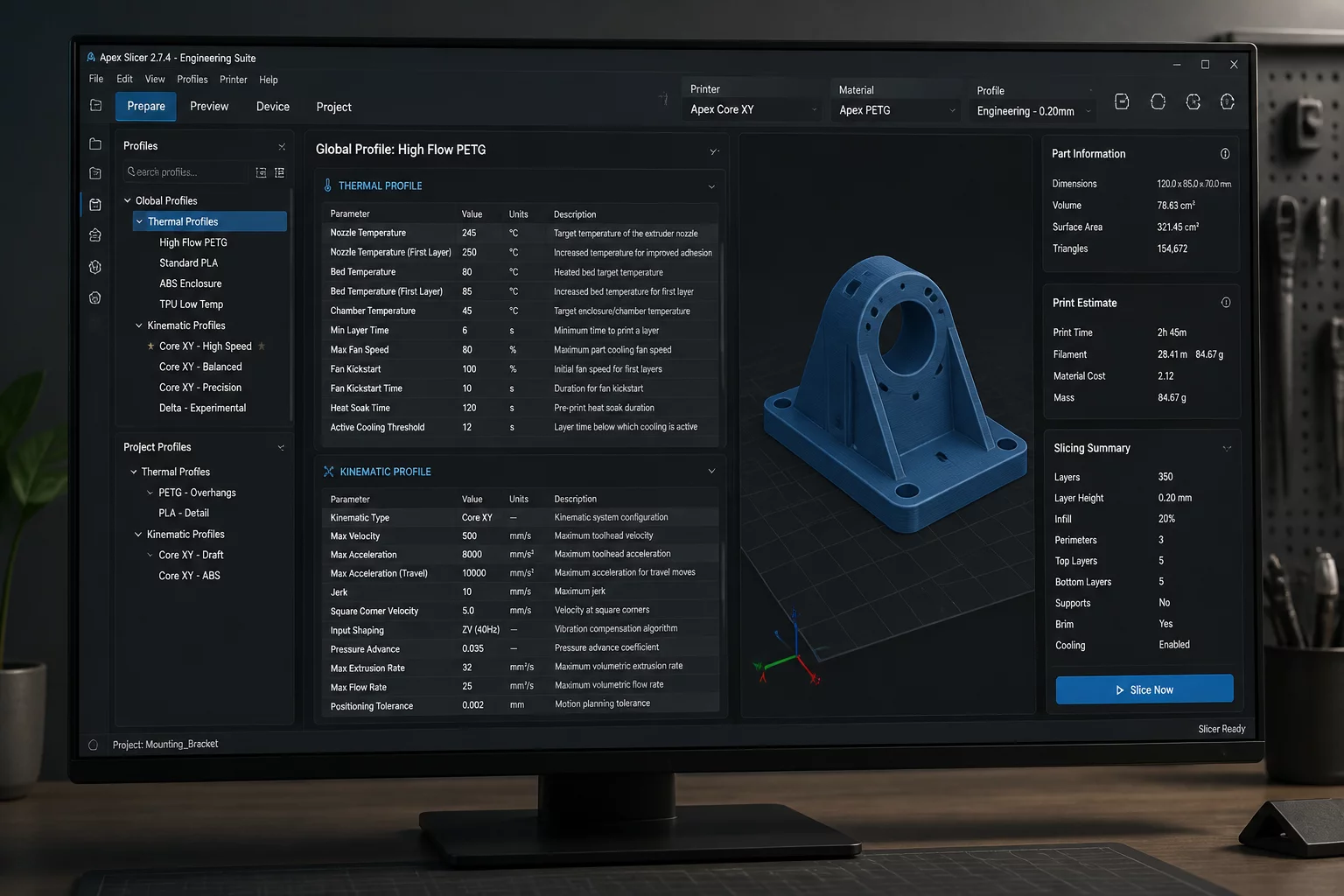
Every production print must rely on a reliable global machine and material preset. Never pollute the base slicing template with one-off experiment values. Layer height defaults, volumetric flow caps, and retraction metrics must remain firmly locked at the global root level.
An honest operational assessment to determine whether our hierarchical slicing architecture matches your production demands or exceeds your current project requirements.
Professionals running continuous multi-machine print jobs who need individual part modifier rules across shared plates without slowing down standard component throughput.
Leaders auditing toolpath repeatability, layer-boundary perimeters, and localized infill regimes to eliminate structural defects and suppress rejected production batches.
Developers delivering mechanical multi-body assemblies requiring pinpoint tolerance compensation, localized surface ironing, and selective seam orientation on functional shafts.
Users looking for universal, push-button preset files that promise to eliminate fundamental physical constraints without analyzing object geometry or slice boundary overrides.
Makers producing standalone figurines, aesthetic trinkets, or uniform display models where global standard layer heights and default slicer settings are completely adequate.
Operators seeking unverified board exploits, unauthorized firmware flashing scripts, or non-standard motherboard bypasses that fall outside calibrated slicer parameter control.
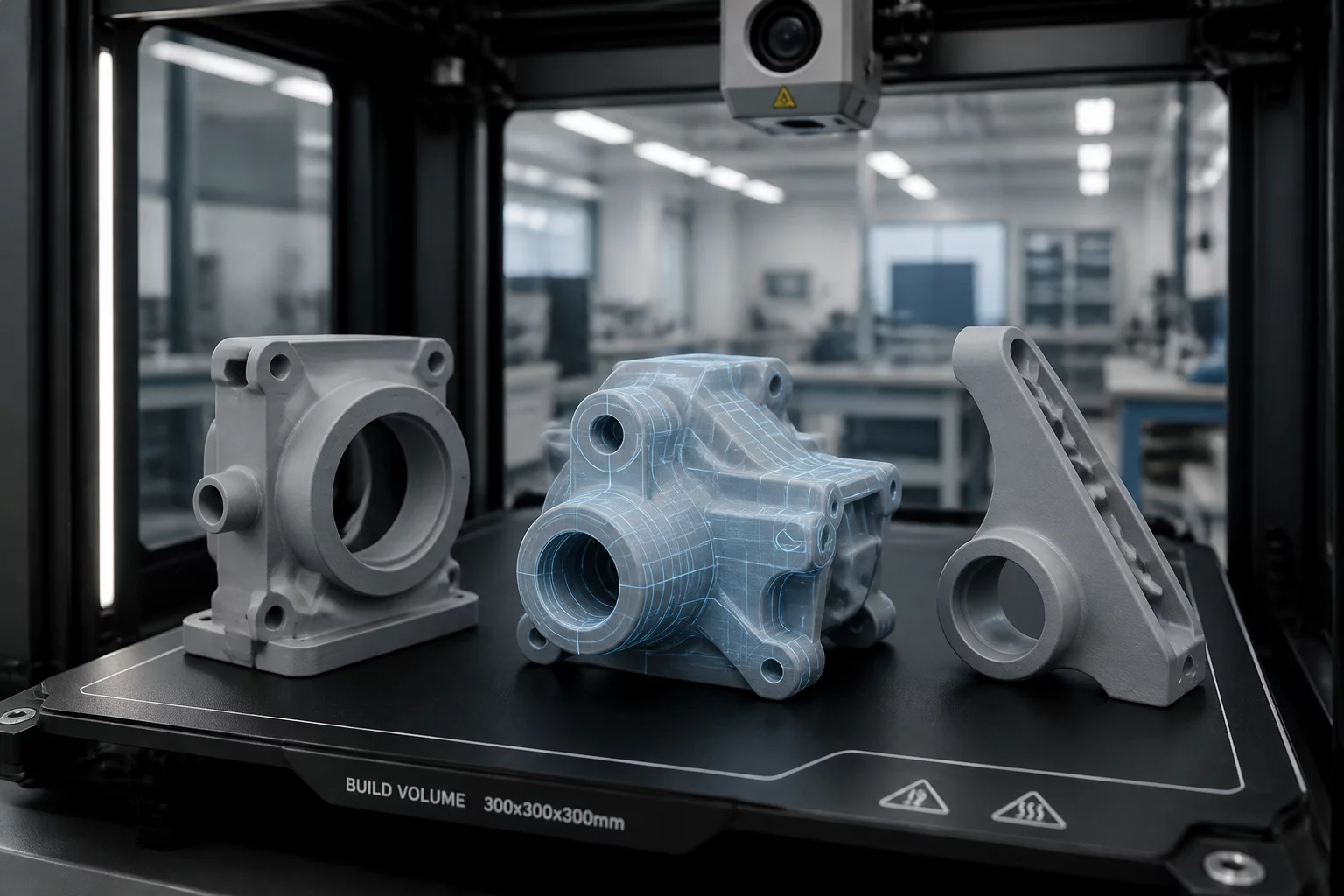
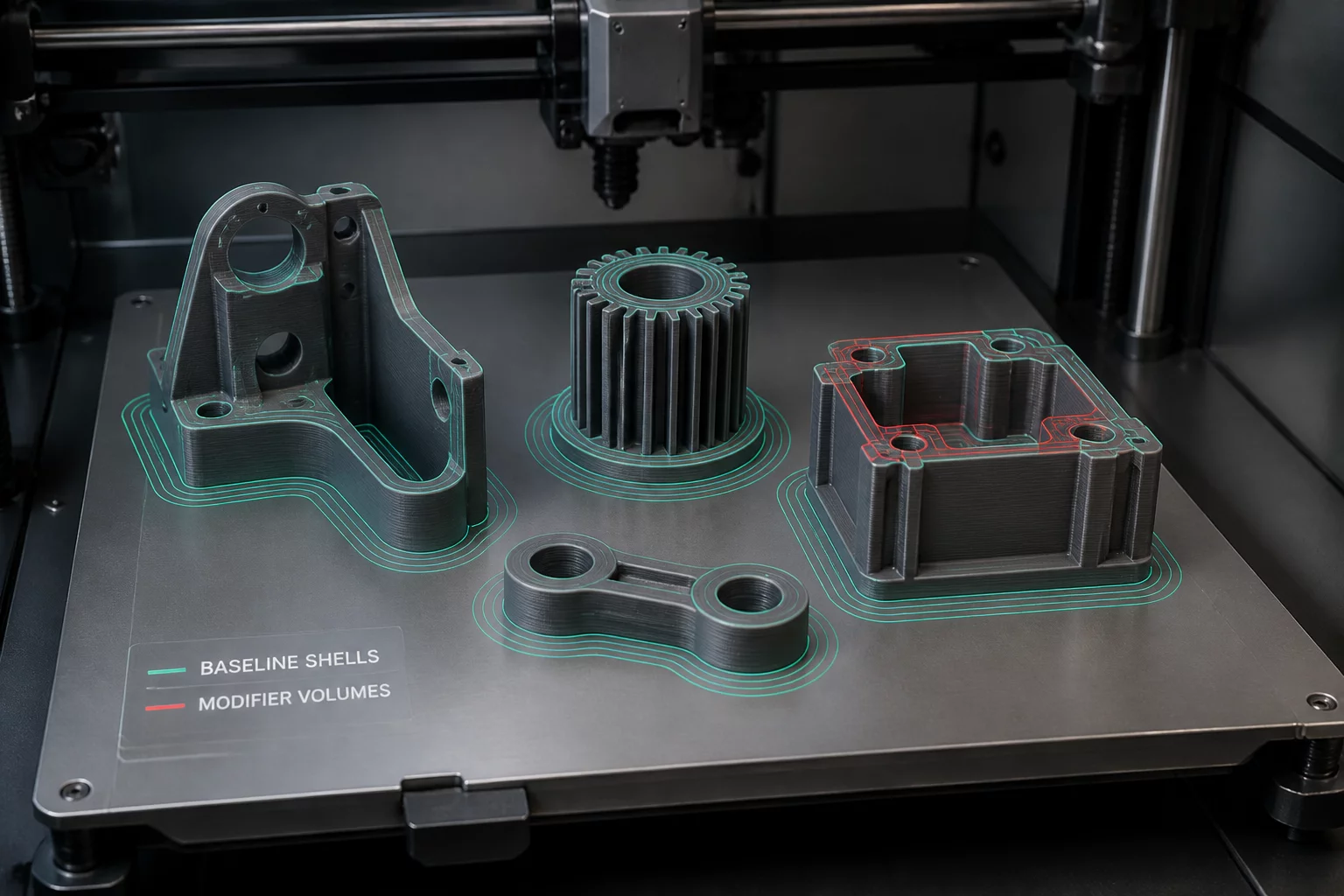
One project plate carries Object A, Object B, and Object C. A and B run on the baseline, while C has geometry for which the team wants to trial a different support approach. Compare changing the global setting — which affects A, B, and C — with keeping the baseline global and applying the exception only where needed.
Rigid structural bracket requiring rapid printing and nominal standard support separation.
Vertical alignment rib with simple geometries, optimized for clean detachment with default baseline.
High-tolerance critical shallow overhang needing zero-tolerance dense interface test layers.
Dense support interface configured at the global print project level to satisfy Object C tolerance.
Unnecessary dense support interface fuses with chassis geometry, creating severe post-processing tears.
Support removal requires power tools; print duration surges by 38% across unneeded interfaces.
Object C receives correct interface density, but total build plate yields a 66% scrap rate across neighbors.
Global slicing profile remains locked to the verified, reliable 15% grid baseline support structure.
Object C node in tree receives explicit per-object support modifier for dense concentric interface.
Visual toolpath validation verifies Object A and B retain fast breakaway layers while C shows dense grid.
Physical coupon run validates clearance on Object C without inflating cycle times or risking A and B.
Delivering cross-continental slicing architecture and remote diagnostic audits across North America, Europe, and Asia-Pacific. Eliminating physical sample shipping bottlenecks through precision digital mesh and toolpath inspection.
Aligned with Eastern, Central, and Pacific working hours. Rapid turnaround for aerospace prototyping teams, high-temp polymer setups, and rapid production farms.
Covering Central European and British manufacturing hubs. Focused on multi-part assembly tolerancing, perimeter integrity standards, and industrial engineering audits.
Collaborating with contract fabricators and development labs across East Asia and Australasia with asynchronous project review handoffs and overnight toolpath validation.
Physical specimen transit adds delays and unneeded logistical friction. Our advisory operates at the digital source file layer to debug root cause slicing failures immediately.
Full hierarchy inspection of modifier meshes, object-level overrides, and baseline project parameter isolation.
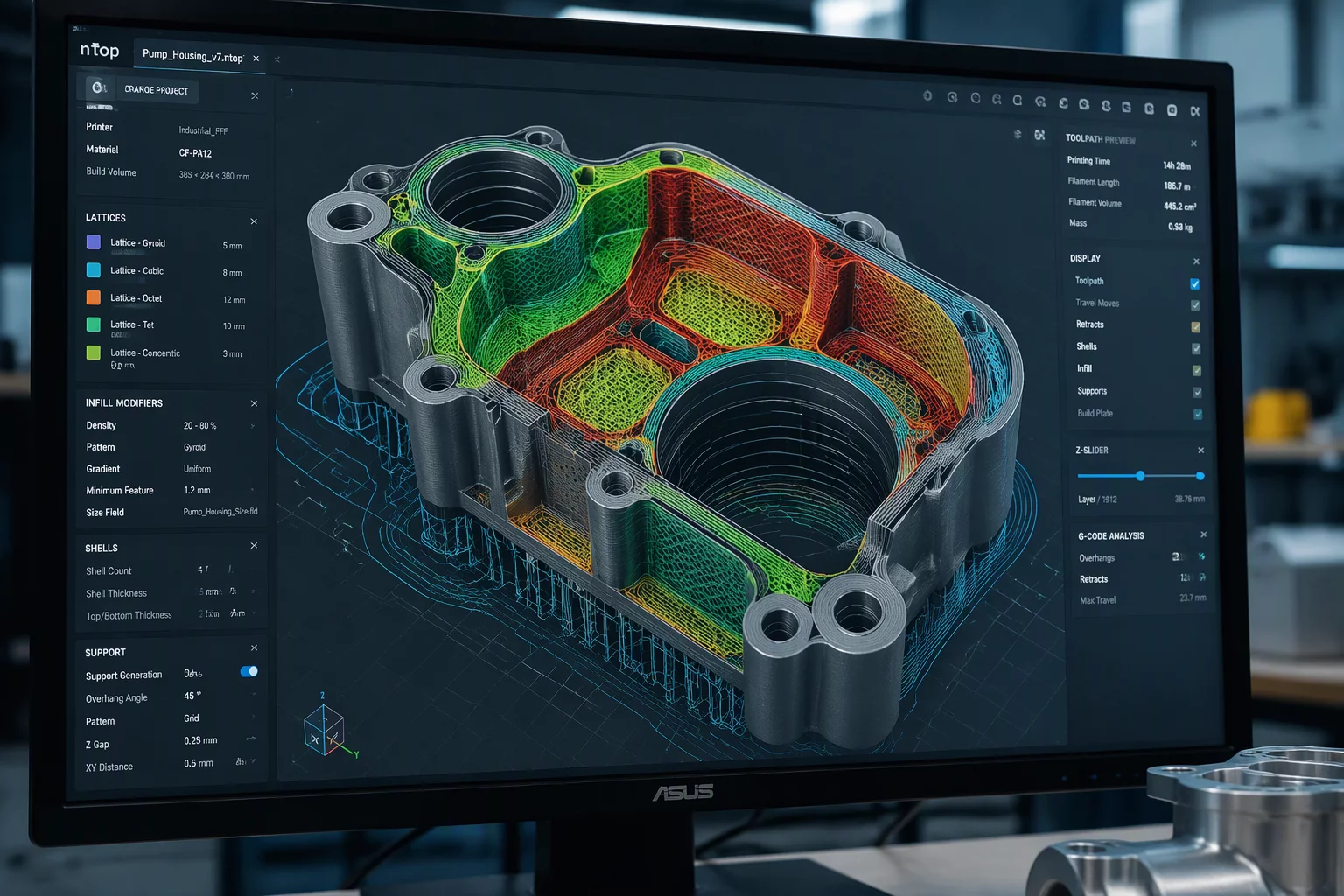
Granular layer-by-layer inspection of volumetric speed drops, seam placement, acceleration dips, and thermal transitions.
Receipt of documented remediation checklists, verified preset files, and repeatable baseline configuration profiles.
Essential knowledge entries defining how global profiles, object parameters, and part modifiers partition slicing settings to protect build predictability.
Preserve print throughput by isolating infill densities and support modifications to unique geometries instead of re-slicing the entire build platform.
Diagnose whether a surface finish defect warrants altering your base printer profile or applying a surgical modifier volume to critical functional regions.
Prevent high-resolution micro-pins and threaded fasteners from forcing ultra-fine layer heights onto large, non-critical mechanical housings.
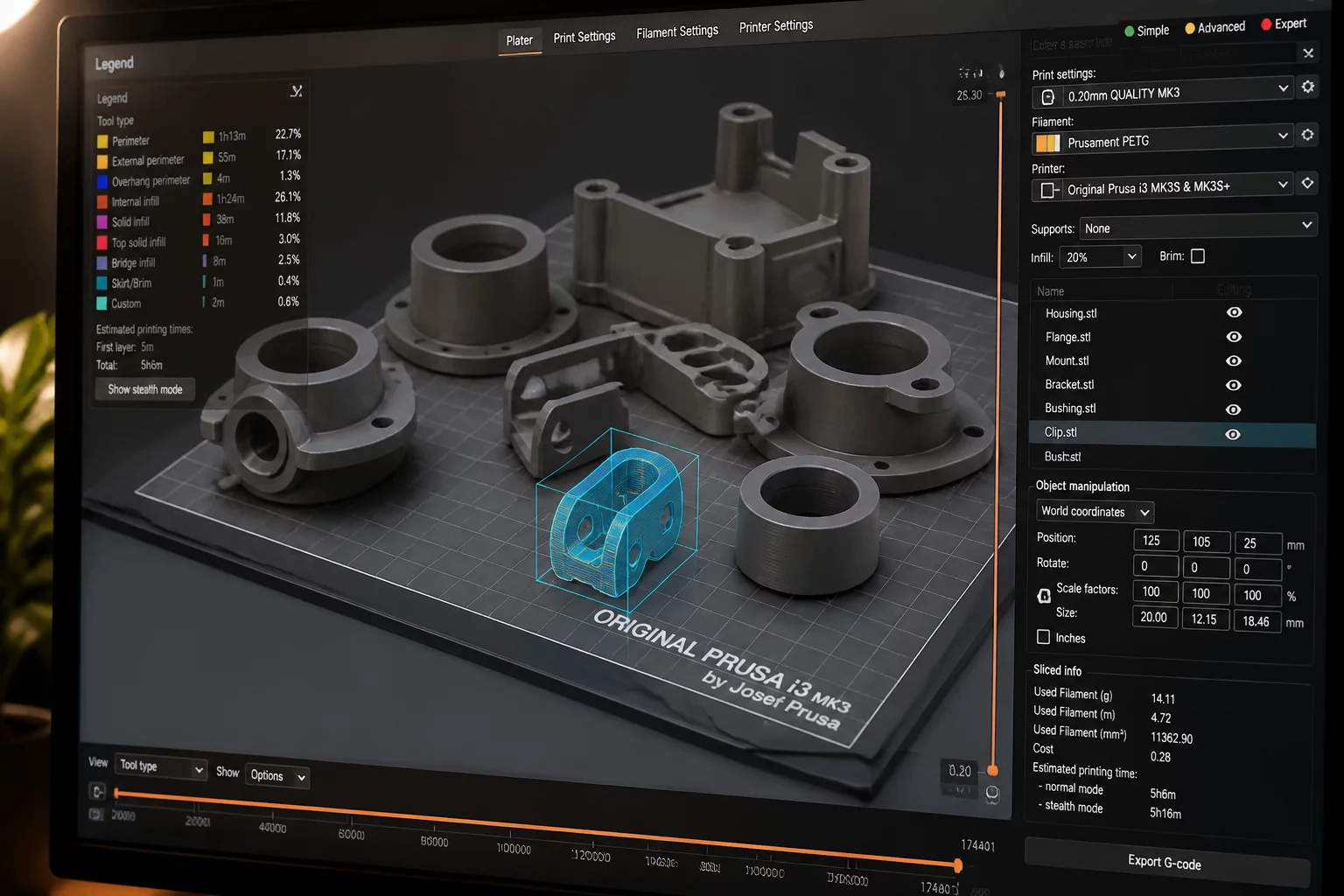
Master the hierarchical inheritance structure separating Global presets, Object-level overrides, and Part-level modifiers across production runs.
Resolving conflicts between tight-tolerance mating interfaces and fast bulk aesthetic housings placed simultaneously on the same production build plate.
Establishing non-negotiable machine boundaries for volumetric extrusion limits, retraction distance, and chamber thermal equilibrium across recurring production runs.
Technical review of how increasing perimeter count locally on mounting holes introduced thermal shrinkage stress and distortion on adjacent thin wall sections.
Operational methods for version-controlling slicer projects so that manual modifiers, brims, and support enforcers survive 3D CAD mesh reloading.
Rigorous architectural breakdowns of parameter inheritance, local overrides, and multi-level mesh modifiers across leading slicing engines.
Technical analysis on how high-frequency contour anti-aliasing integrates with localized variable layer height overrides without breaking global baseline speeds.
Systematic examination of the interface redesign demarcating print profiles, multi-plate staging, and discrete object-level modifier hierarchy logic.
Multi-level parameters documentation update detailing assembly guides, hierarchical object-level overrides, and precision 6DoF camera navigation during modifier placement.
Explore verified fieldbook workflows dissecting global project definitions, object overrides, and local sub-mesh modifiers across leading slicer engines.
Comprehensive production scheduling covering multi-bed sequencing, remote printer fleet queue dispatching, and targeted perimeter speed overrides across automated continuous print farms.
Architectural separation between shared assembly presets and plate-specific brim parameters for interlocking functional mechanical enclosures.
Localized volumetric cooling envelope control combined with sparse interior infill transitions within thin-walled functional aerodynamic cowlings.
Systematic verification of priority overrides between global process presets, object outer wall counts, and sub-part solid infill block zones.