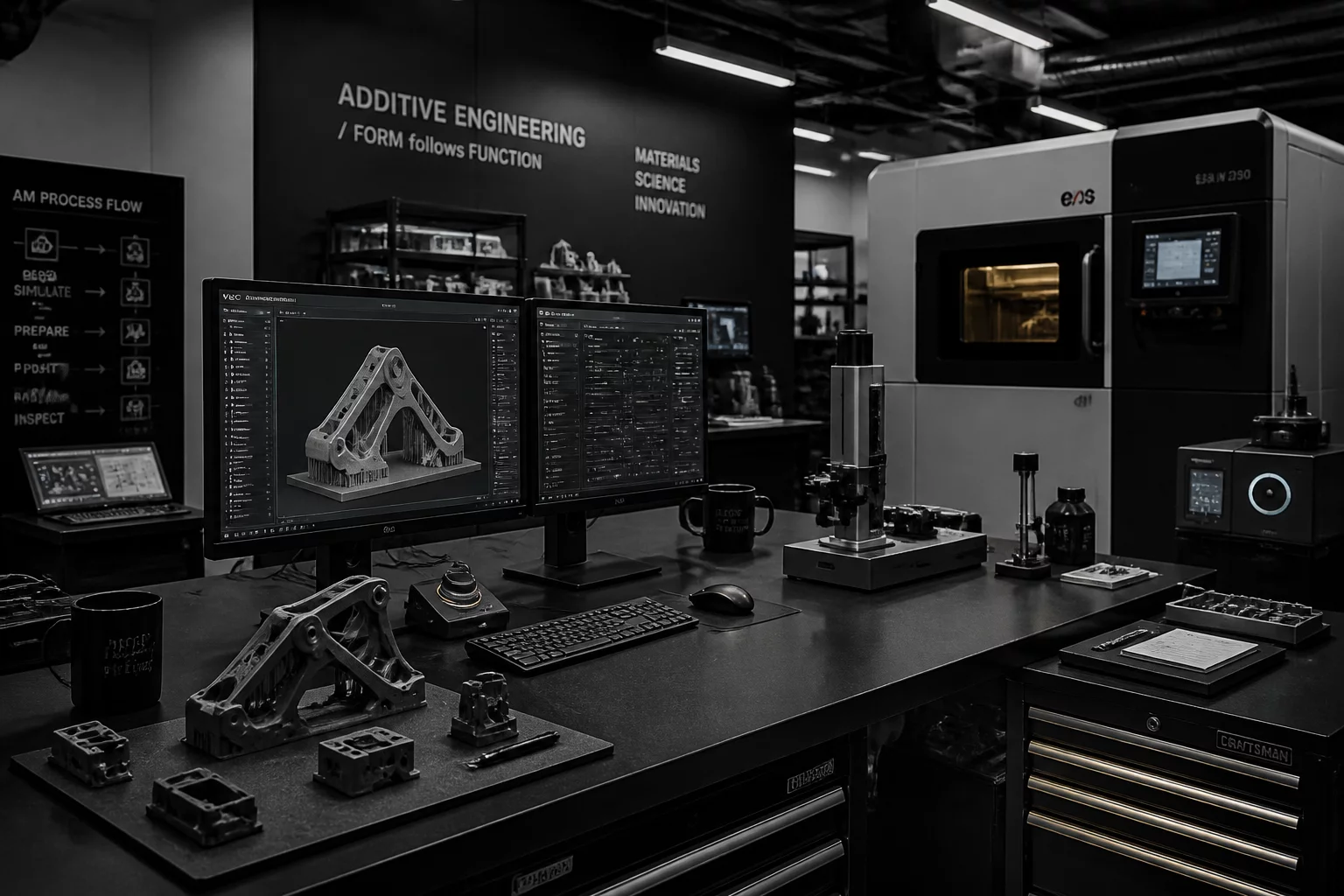
SCOPE-SPECIFIC SLICING METHODOLOGY
A rigorous reference manual for additive manufacturing engineers and technical makers transitioning from fragile global slicing presets to robust object-level parameter control.
CONTAINMENT OVER CONTAMINATION
Additive manufacturing workflows collapse when engineering adjustments are saved to global slicing profiles. SettingScope Fieldbook standardizes parameter localization across objects, modifiers, and multi-part assemblies.
Zero unintended inheritance. Universal filament and machine profiles remain immutable while dynamic adjustments stay confined strictly to local meshes.
Sub-millimeter perimeter targeting and volumetric infill gradients deployed via negative parts, custom modifier boxes, and height-range brackets.
Deterministic parity across modern cutting-edge slicers: OrcaSlicer, PrusaSlicer, and Bambu Studio, verified for continuous production reliability.
EDITORIAL VERIFICATION STANDARDS
Every guideline published in SettingScope Fieldbook undergoes empirical print validation under controlled shop floor conditions to verify toolpath repeatability.
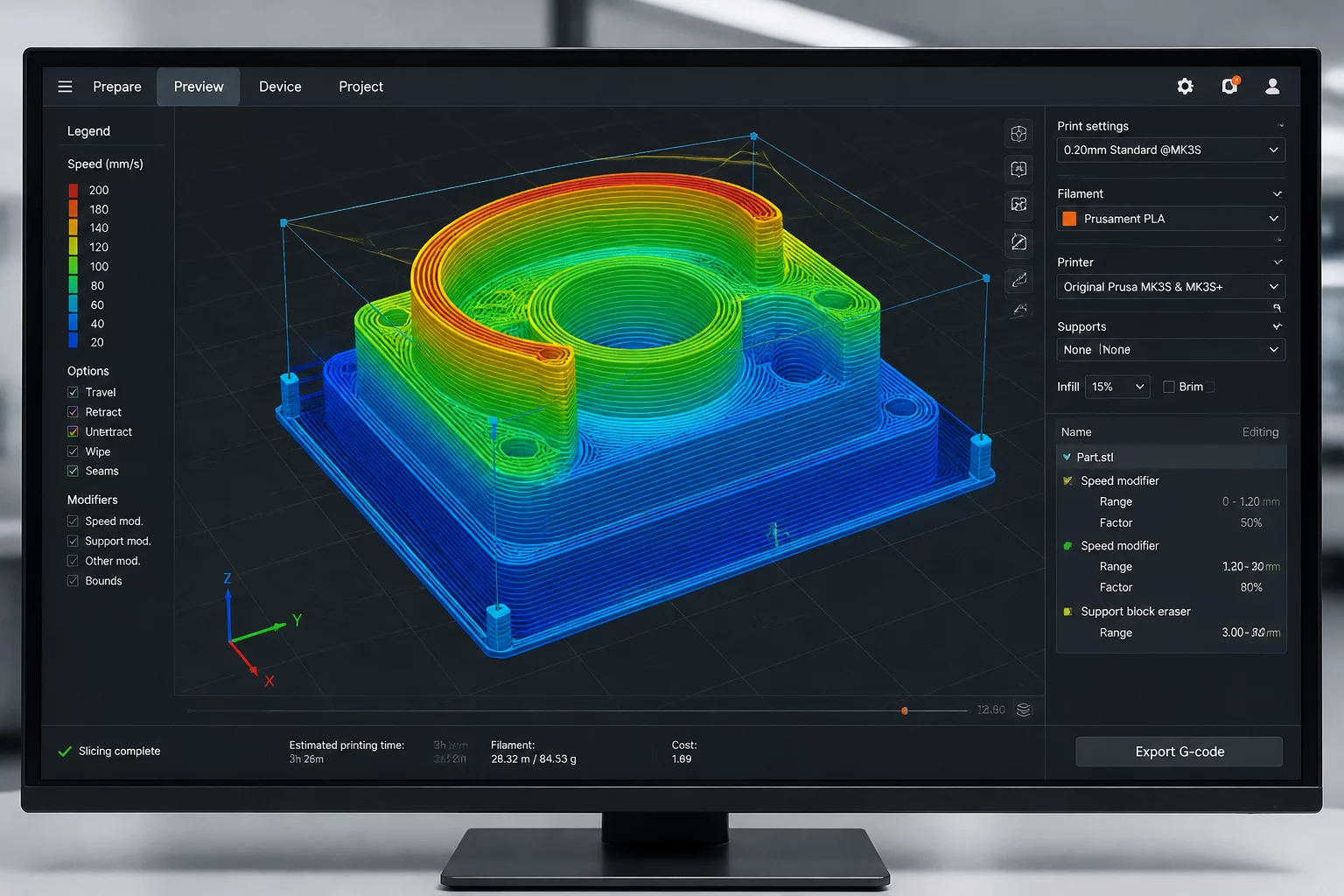
OVERHANG & SPEED CONTINUITY
Variable layer height boundaries and fan speed transitions are stressed across 45-to-75 degree overhang matrices to ensure modifiers do not trigger seam artifacts.
INFILL TRANSITION DENSITY
Localized infill modifiers are tested for toolpath continuity at internal boundary joints, avoiding stress concentrations in high-load structural components.
MULTI-PLATE SLICER PARITY
Cross-engine toolpath logs are audited between OrcaSlicer and Bambu Studio to isolate engine-specific micro-retractions and pressure advance deviations.